As Bak famously wrote in his 1996 book “How Nature Works”:
“The sandpile is to self-organized criticality what the pendulum is to classical mechanics.”
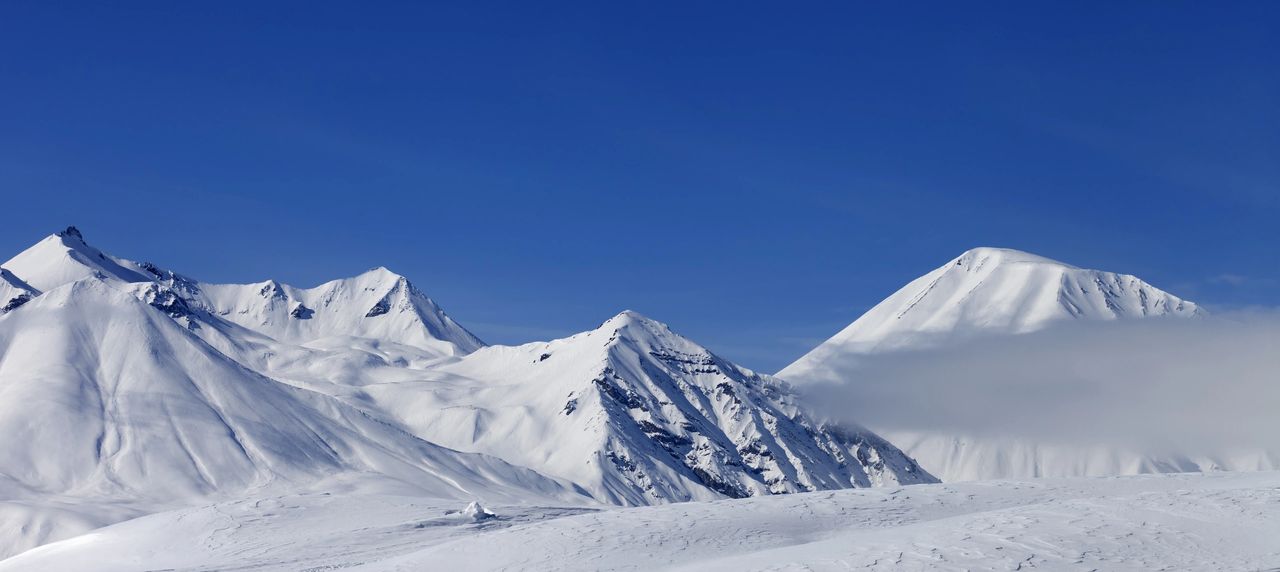
I remember reading this book in college and it had such a profound impact on the way I think. Maybe it’s because I was a wannabe ski bum and book’s central idea was how one snowflake can trigger an entire avalanche. It took me an entire to build the model
Per Bak, a Danish theoretical physicist, introduced the concept of Self-Organized Criticality (SOC) in a groundbreaking 1987 paper with colleagues Chao Tang and Kurt Wiesenfeld. This elegant theory explains how complex systems naturally evolve toward critical states without external control, creating patterns that repeat across different scales.
The Fundamental Concept
Self-organized criticality describes systems that:
- Naturally evolve toward a “critical state” without external tuning
- Maintain this state through a balance of driving forces and dissipation
- Exhibit avalanche-like responses where small inputs can trigger effects of any size
- Produce event sizes that follow power-law distributions (mathematical signature of criticality
The Iconic Sandpile Model
The most famous illustration of SOC is the sandpile model:
- Imagine grains of sand dropped one by one onto a surface
- As the pile grows, it eventually reaches a critical slope
- Adding just one more grain can trigger anything from a tiny shift to a massive avalanche
- After an avalanche, the system returns to its critical state
What makes this profound is that complex, unpredictable behavior emerges from extremely simple rules. The system “tunes itself” to criticality without any external control.
Where We See SOC in Nature
Self-organized criticality helps explain remarkably diverse phenomena:
- Earthquakes: Tectonic plate movements follow SOC patterns
- Forest fires: Natural fire patterns display critical behavior
- Biological extinctions: The fossil record shows extinction events following power laws
- Neuroscience: Brain activity exhibits neural avalanches
- Financial markets: Stock market fluctuations display SOC characteristics
- Evolutionary jumps: Punctuated equilibrium in evolution
The Mathematical Signature
The key mathematical feature of SOC systems is the power-law relationship between event frequency and size:
P(s) ∝ s^(-τ)
Where P(s) is the probability of an event of size s, and τ is a critical exponent. When plotted on a log-log scale, this produces a straight line—exactly what we observe in the simulation’s avalanche distribution.
Power Laws!
This power manifests mathematically as a “power-law” distribution of event sizes, where the frequency of an event is inversely proportional to its size raised to some power (f ∝ s^-τ). Unlike bell curves or other common distributions, power-laws have no characteristic scale—meaning avalanches of all sizes occur, from tiny to system-spanning, with no typical size dominating. This property emerges naturally as systems organize themselves to the critical threshold without external control. It’s why adding one grain of sand to a pile can trigger anything from a minor shift to a massive avalanche, why a single spark can ignite either a small flame or a forest-destroying wildfire, and why minor market fluctuations occasionally cascade into financial crashes. The power of SOC is that complex, dramatic behaviors arise inevitably from simple interactions, creating universal patterns that appear across vastly different systems in nature! Chaotic and complex systems tend to create one huge outcome! Think about life, economics…all these systems seem to have huge winners and a long tail of so-sos.
Per Bak’s Legacy
Per Bak (1948-2002) revolutionized our understanding of complex systems by showing how complexity can emerge naturally from simple rules. His work bridges disciplines from physics to biology, economics, and beyond, providing a universal framework for understanding systems that appear to operate “at the edge of chaos.”
SOC explains how nature creates complexity without design and why certain patterns recur across vastly different scales and systems—all captured elegantly in the humble sandpile.